Image
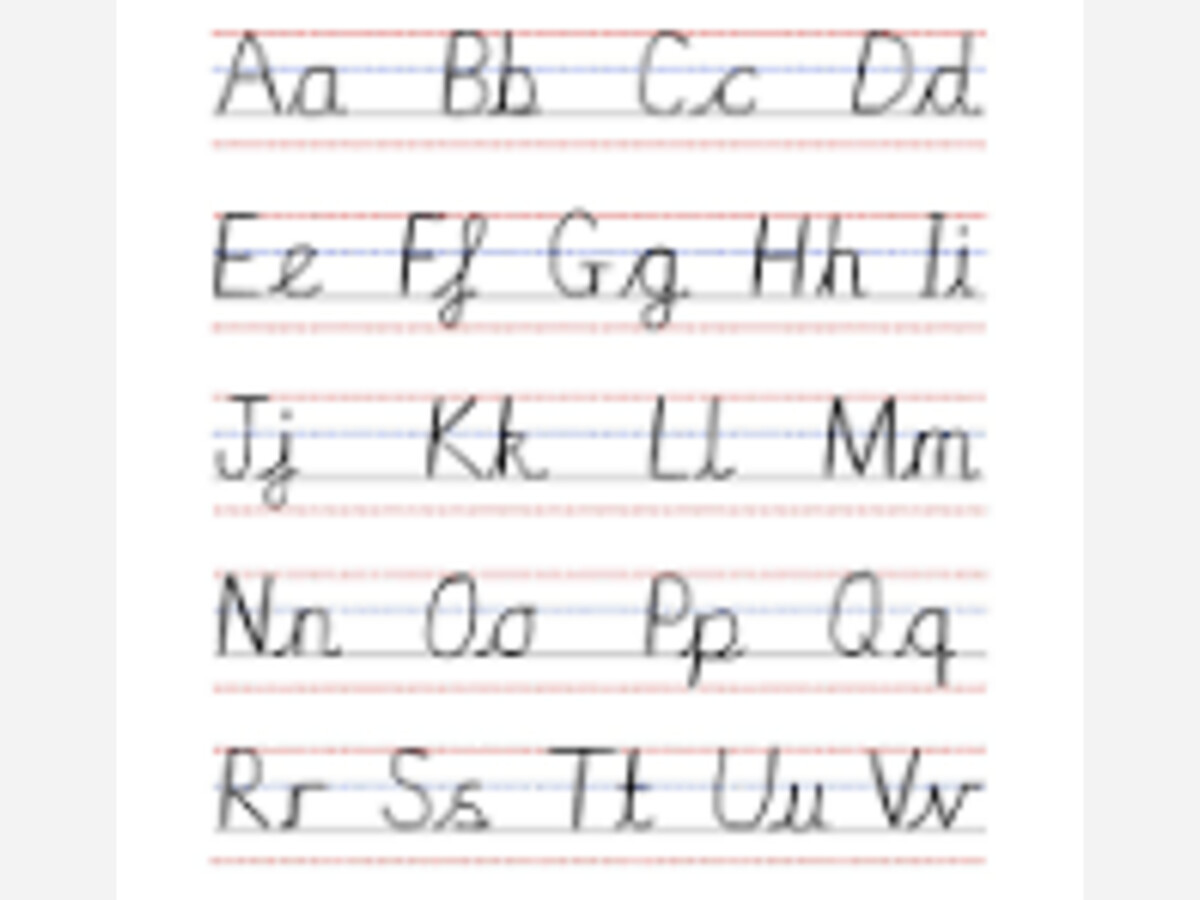



Between GA--Georgia public schools are set to reintroduce cursive writing instruction for elementary students beginning in the 2025–26 academic year, marking a significant shift in the state’s approach to handwriting education. The move comes as part of an overhaul of the state’s English Language Arts (ELA) standards, approved by the Georgia Department of Education and effective from July 2025.
Under the new standards, handwriting instruction will begin in kindergarten, with an explicit focus on cursive writing introduced in third grade. Students in grades three through five will receive formal lessons in reading and writing cursive, with the goal of building fluency and enhancing communication skills. Third graders will start by learning how to read and write cursive letters, while fourth and fifth graders will practice to improve their handwriting speed and legibility.
To support the rollout, the Georgia Department of Education has provided guidance packets for parents and is encouraging districts to adopt a uniform cursive style, such as Zaner-Bloser or D’Nealian, to ensure consistency and a smooth transition from print handwriting taught in earlier grades.
State education officials emphasize that cursive writing is not just a nostalgic skill but a practical one. April Aldridge, deputy superintendent of teaching and learning at the Georgia Department of Education, explained, “We want to ensure that our students … have all the skills they need. In the world we live in, that means we have to have a varied degree of skills and we need to know when to use the skills in which situations”.
Advocates point to research suggesting that mastering cursive can boost writing fluency, spelling, and cognitive development. Sarah Welch, an ELA program specialist with the state, noted that fluent handwriting allows students to focus more on organizing and expressing their ideas, rather than on the mechanics of writing each letter. Furthermore, experts like Reinhardt University’s Debby Pinion highlight that cursive’s continuous motion can be especially beneficial for students with dyslexia, as it reduces the need to lift the pencil and helps with letter formation and word spacing.
The return of cursive has sparked debate among parents and educators. Some parents welcome the move, seeing it as a valuable life skill, while others question its relevance in a digital age, arguing that instructional time might be better spent on typing or technology skills4. Brittany Klein, a parent in Cherokee County, expressed skepticism: “I just think if they aren’t going to use it regularly it’s a wasted skill. My kids aren’t even in high school yet and they completely forgot”.
While the debate over cursive’s place in modern education continues, Georgia’s education leaders are confident that the skill will benefit students both academically and personally. As the new standards take effect, Georgia will join a growing number of states seeking to preserve the art—and utility—of cursive writing for the next generation


Patchy rain nearby, with a high of 69 and low of 57 degrees. Mist during the morning, patchy rain nearby for the afternoon, overcast in the evening, mist overnight.