Image
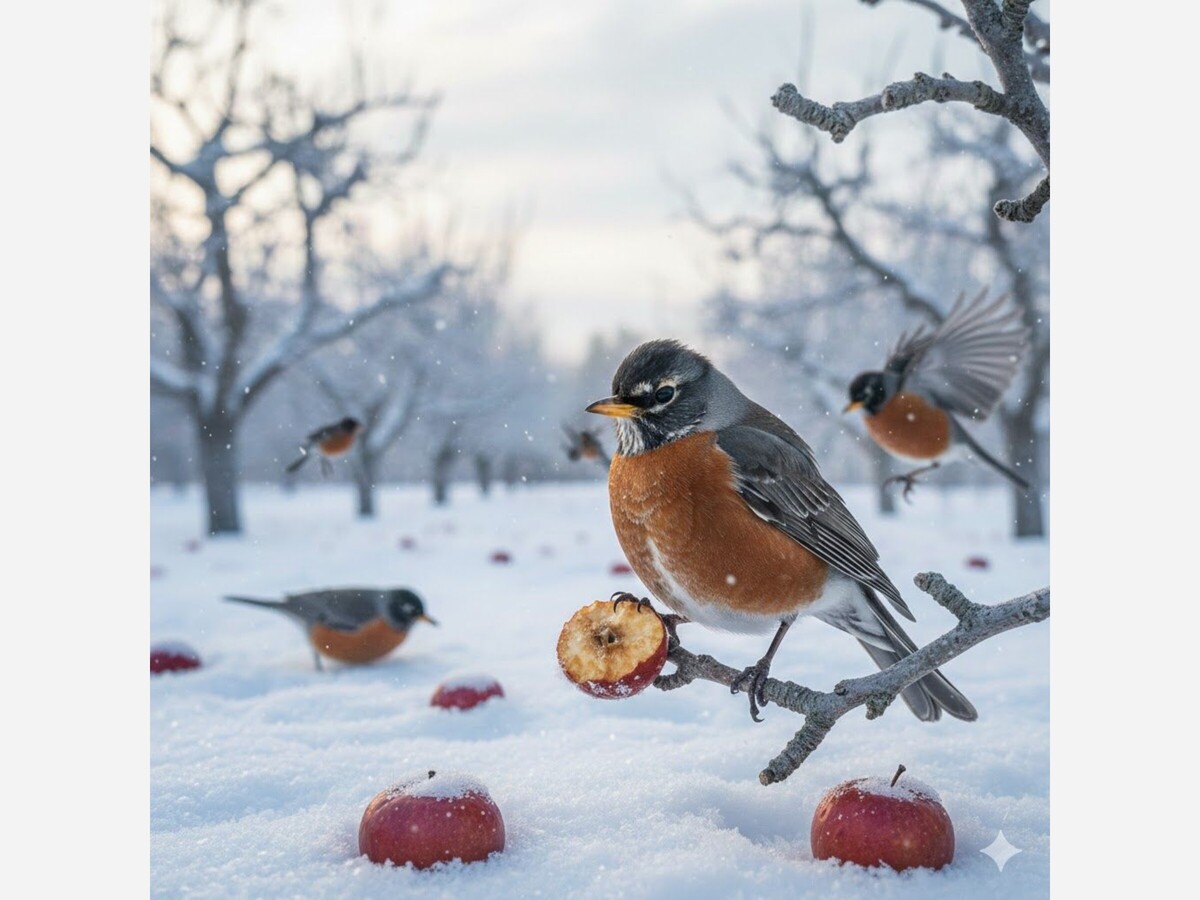



BETWEEN GA: The tipsy survivalist's winter banquet is a transformation worthy of a Victorian novel, Master Charles. When the first frost glazes the earth and the worms retreat deep below the frost line, the robin does not panic; it simply pivots from garden carnivore to winter connoisseur. The soft, sun-warmed earthworms of June are replaced by the fermented, frost-bitten fruit of December. Fallen apples and lingering crabapples become the primary currency of survival, providing the vital sugars needed to keep their internal furnaces roaring against the chill.
The fascinating twist of the winter robin is that they often become unintentional revelers. Because many of these fruits remain on the branch or the ground long after they have ripened, they undergo a natural fermentation process. It is a well-documented phenomenon that robins, in their quest for calories, sometimes consume enough fermented berries or apples to become quite literally tipsy. There is something profoundly human and hilarious about seeing a bird—the very symbol of grace and flight—overshoot a landing or stumble slightly on a frozen branch because it had one too many crabapples for lunch.
I find it delightful to imagine these nomadic flocks as a band of tiny, feathered travelers wandering from orchard to orchard, surviving the harsh winter not just with grit, but with a bit of a seasonal buzz. They transform from the solitary, "early bird" sentinels we see in the spring into a boisterous, social community that understands the best way to endure a long winter is through a shared feast. It is a reminder that even in the coldest months, nature finds a way to keep things lively.



Patchy rain nearby, with a high of 70 and low of 57 degrees. Mist in the morning, patchy rain nearby during the afternoon, sunny for the evening, mist overnight.